Just How To Check Out A Peptide Purity Test: Hplc, Mass Spectrometry And Coa Interpretation For Uk Scientists 2026
Confirmed > 99% Lab-grade Peptides
A useful assay gauging downstream signaling-- or a structural research making use of NMR or X-ray crystallography-- demands the greatest purity available. Crystallographers in particular usually require ≥ 98% pureness since also small pollutants can protect against crystal development or introduce condition right into the crystal latticework. As molecules exit the column, they pass through a detector-- normally a UV detector readied to 214 or 220 nm, wavelengths where the peptide bond soaks up light highly. The detector records how much UV light is absorbed in time, generating a graph called a chromatogram. This overview breaks down what pureness actually means in peptide chemistry, just how it's determined, what the contaminations are, and just how to review the documents that confirms a peptide is what it asserts to be.What Hplc Can Not Confirm Alone

- This is important when the main inquiry is whether the observed component matches the desired peptide or whether a modification has actually been included as expected.
- HPLC can reveal the presence of extra optimals; LC-MS can aid appoint most likely identities to those relevant varieties.
- This links straight with managing subjects such as peptide storage and peptide reconstitution.
- All items noted are purely for in-vitro lab r & d make use of just.
Crude, Desalted, And High-purity: Comprehending Peptide Grades
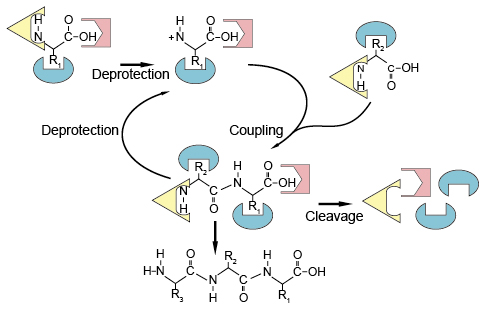
The gold standard for measuring peptide pureness is high-performance liquid chromatography, generally abbreviated as HPLC. If you see a purity percent on a peptide product, it almost certainly came from an HPLC analysis. This issues since peptides are developed one amino acid at once via solid-phase peptide synthesis (SPPS). At each action, there's a tiny possibility that something goes wrong-- an amino acid does not attach, the wrong alteration occurs, or a side response produces an unintentional byproduct. Over a chain of 10, 20, or 40 amino acids, those little per-step mistake rates substance.
Peptide screening is the collection of logical checks used to evaluate a peptide sample prior to it is used in a research study operations. In useful COA review, the term generally refers to pureness testing, identification screening, and documentation review. Pureness testing asks just how much of the identified sample is the primary peptide versus associated impurities. Identification testing asks whether the determined mass or sequence-related evidence matches the intended peptide. Paperwork evaluation asks whether the record is batch-specific, traceable, and detailed enough to be examined. Peptide screening is the analytical procedure used to verify that a study peptide is both pure and correctly recognized.